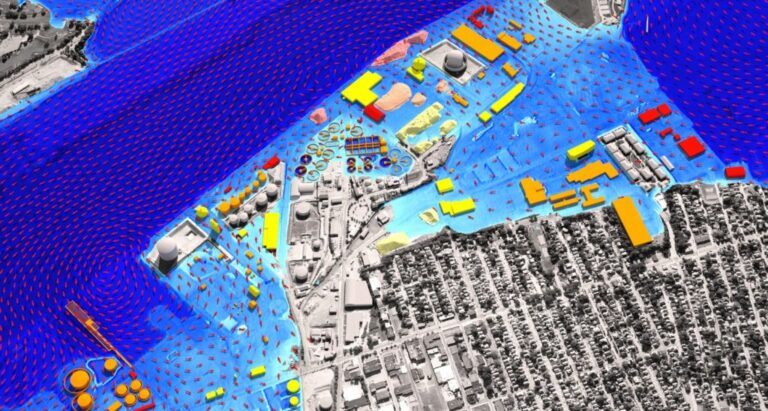
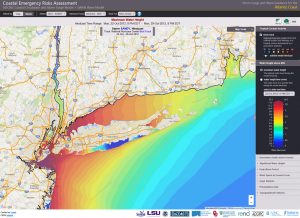
Policy simulations include visualization of commercial port properties impacted by potential sea-level rise. Illustration by Dr. Peter Stempel and Dr. Austin Becker.

Researchers focus on actions that increase preparedness, resilience

Building better levees, tracking storms more accurately and training future emergency management professionals can have a major impact on community resilience to natural hazards. On the individual level, however, changing the behavior of residents in storm-susceptible communities could yield similarly fruitful results. When individuals get specific information about how a storm could impact their property … Read more

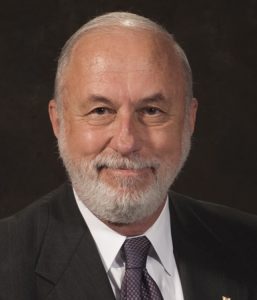
Doug Bellomo

CRC Partners: Doug Bellomo, U.S. Army Corps of Engineers

Doug Bellomo is a civil engineer with the U.S. Army Corps of Engineers (USACE) Institute for Water Resources in Fort Belvoir, Va. (and a member of the CRC Advisory Board). He helps lead the Corps National Flood Risk Management program and works within the USACE Levee Safety Program and on coastal activities. In these capacities, he seeks to develop and implement policies and business practices to better integrate USACE activities across the flood risk management life cycle and to promote shared responsibility for flood risk. He spoke to the Coastal Resilience Center about how his work and the Center’s work complement one another.


CRC: Can you tell us a little about your current position at the Army Corps Institute for Water Resources and about how your career led to this point?

Bellomo: I’m currently senior technical advisor for flood risk management. The Institute plays an interesting role within the Corps, not necessarily as an operational organization but one that looks out to the future and helps try and identify challenges and opportunities. Those include integrating water missions in the Corps including recreation, dam operation, flood risk reduction, infrastructure, hydropower operation, and navigation, among others.
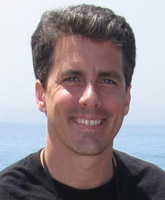
Doug Bellomo
Doug Bellomo

I’m helping in a variety of areas, including levee safety and dam safety – we’re the owner and operator of 715 dams. Another area is policy development: There was an executive order that was released in January 2015, and I’m helping USACE headquarters in developing draft procedures for implementing it.

I work with a broader team on the National Flood Risk Management Program, which includes Silver Jackets – a program within the Corps where we use our convening power to pull together state and other federal agencies to form teams to tackle flood risk-related challenges. The states really make and carry the agenda and we help facilitate and provide some technical support where we can.

I have a bachelor’s of science degree in civil engineering and a master’s of science degree in civil engineering, and my thesis was on the impact of seawalls on beaches in 1992-93. After I got out of graduate school I got a job in the private sector. I worked there for about four years and then joined FEMA, where I stayed for about 18 years. As Director of the Risk Analysis Division, I had the pleasure of working with great professionals and oversaw the development of maps for the National Flood Insurance Program. I chaired the National Dam Safety Review Board and Interagency Committee on Dam Safety, and oversaw implementation of the FEMA Hazard Mitigation Planning function, Hazus and other activities.
Read more

Work across multiple states focuses on health of levee systems

About 43 percent of the nation’s population lives in areas protected by levees, but rising sea levels and land subsidence increasingly threaten these structures. That’s why Dr. Victoria Bennett of Rensselaer Polytechnic Institute (RPI) is working to empower levee officials to use satellite imagery and GPS sensors to more quickly and cost-effectively assess the health … Read more

Kinston is one of six communities that is the focus on the Hurricane Matthew Disaster Recovery and Resilience Initiative. Photo by Travis Klondike/N.C. State University.

Coastal Resilience Center to lead post-Matthew disaster recovery efforts

  Coastal Resilience Center of Excellence (CRC) researchers and students across several North Carolina universities will be leading three primary efforts in response to Hurricane Matthew. These include: 1) studying the impacts of Hurricane Matthew on eastern North Carolina communities; 2) advising North Carolina Gov. Roy Cooper and the North Carolina Division of Emergency Management … Read more

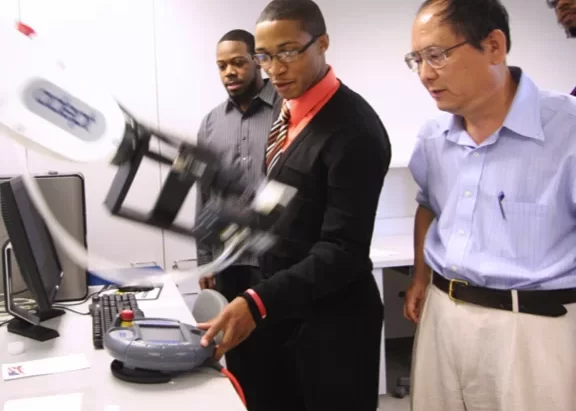
Dr. Ying Bai, a professor of computer engineering at JCSU, supervises student research for the CRC. Photo by Jeff Cravotta.

Project teaches students wider application of computer sciences

At Johnson C. Smith University (JCSU) in Charlotte, N.C., Coastal Resilience Center (CRC) Principal investigator Dr. Hang Chen is working to prepare the next generation of leaders in coastal resilience. Through her project, “Preparing Tomorrow’s Minority Task Force in Coastal Resilience through Interdisciplinary Education, Research, and Curriculum Development,” undergraduate students at JCSU – a Historically … Read more

Thomas Richardson

Richardson named Associate Director of CRC

Tom Richardson has been named Associate Director of the Coastal Resilience Center of Excellence (CRC), effective Jan. 1. Richardson, who was previously Transition Director of the CRC, will be responsible for many day-to-day activities involved in managing the Center. He is based at Jackson State University in Jackson, Miss. “I am very grateful for Tom’s … Read more

Dr. Robert Twilley

CRC researchers working with Hurricane Matthew-affected communities

Since Hurricane Matthew hit the Southeastern U.S. in early October, Coastal Resilience Center researchers have been working with affected states and communities to better withstand the next storm. In the days leading up to and during the storm, CRC researchers tracked the storm path and predicted storm surge along Matthew’s path up Florida, Georgia, South … Read more

Coastal Resilience Center to conduct White House education study on resilient design

The Coastal Resilience Center of Excellence (CRC), funded by the Department of Homeland Security (DHS), Science and Technology Directorate (S&T) Office of University Programs, is funding one of the new federal actions last month as part of the Obama administration’s recognition of the role of Resilient Design Education in a resilient future. The announced action, … Read more

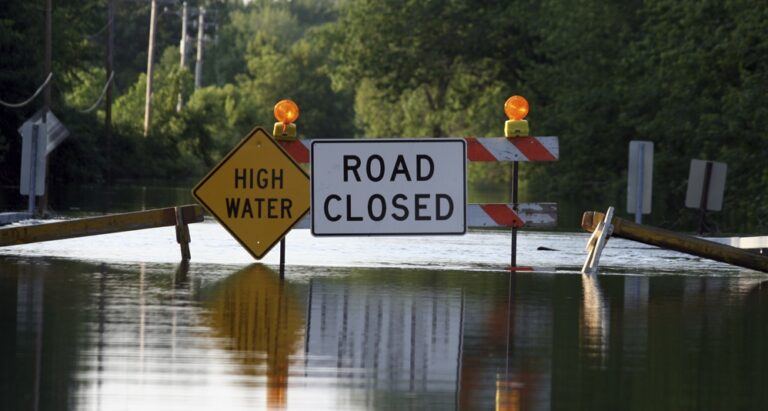
High floodwaters. Photo courtesy the National Oceanic and Atmospheric Administration.

Coastal Resilience Center joins Southeast Disaster Recovery Partnership

The Coastal Resilience Center of Excellence (CRC) has joined a regional government partnership to aid the disaster recovery process in the Southeastern United States. The Southeast Disaster Recovery Partnership, which is run by the Southeast Coastal Ocean Observing Regional Association (SECOORA), was formed as the result of a National Oceanic and Atmospheric Administration grant to … Read more