Students learn about Charlotte flood buyout program

Shortly after Hurricane Florence came through North Carolina, causing record rainfall and floods, students at the University of North Carolina at Chapel Hill visited a county where years of investments in flood control measures have yielded clear results. The students on the field trip were enrolled in a class taught by Dr. Gavin Smith, a … Read more

Center releases reports on Matthew recovery, rebuilding for six communities


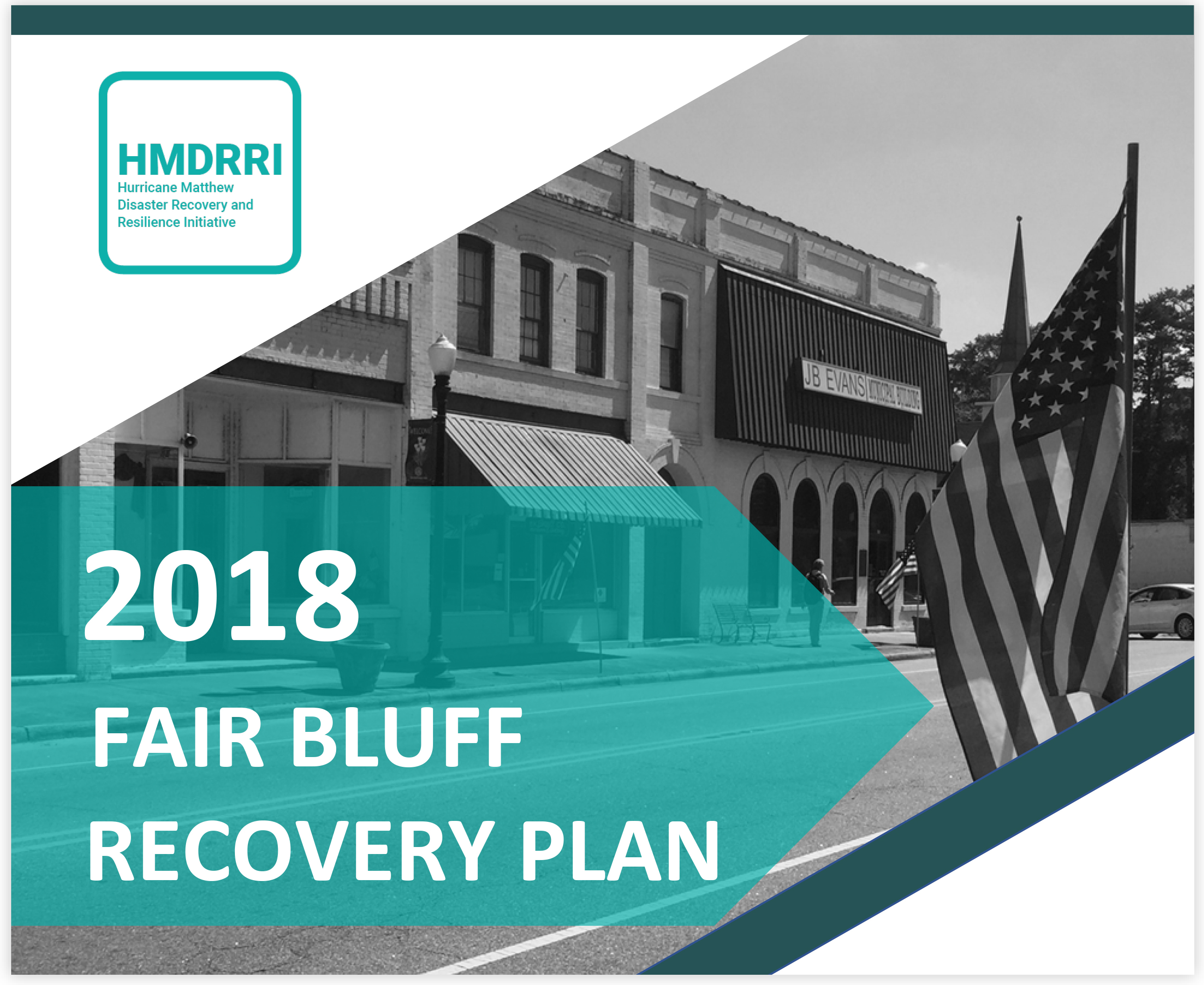
Fair Bluff report
One of the released reports, a Recovery Plan for Fair Bluff, N.C.

Communities across eastern North Carolina have a long road to recovery after experiencing two significant hurricanes in the past three years, but recent reports from the Coastal Resilience Center of Excellence (CRC) point toward several steps that communities can take to make themselves more resilient to future storms.

The Hurricane Matthew Disaster Recovery & Resilience Initiative (HMDRRI), an 18-month effort led by CRC researcher Dr. Gavin Smith, has produced final reports on efforts to aid the recovery process in six eastern North Carolina communities hit by Hurricane Matthew in October 2016. HMDRRI was funded by the State of North Carolina (through disaster-recovery appropriations and through the N.C. Policy Collaboratory at the University of North Carolina at Chapel Hill) and the Department of Homeland Security Science and Technology Directorate, through Office of University Programs and the Flood Apex program.

The project has produced several reports focusing on the unique needs of each of the six focus communities: PrincevilleFair BluffSeven SpringsWindsorKinston and Lumberton. Reports include Homeplace booklets, which offer proposed design standards for rebuilt or retrofitted homes in each of the six communities, and were developed by North Carolina State University’s Design Lab. Other reports include downtown flood retrofit reports, land suitability analyses and market/financial analyses. Each of these reports can be found by community on the HMDRRI Resources page.
Read more

For third year, summer programs pair education projects with research

In a continuation of its exchange programs, the Coastal Resilience Center of Excellence (CRC) facilitated exchanges between students, faculty and research projects this past summer.

As part of the SUMmer Research Experience (SUMREX) Program, Bryan Acevedo-Marerro and Jorge Santiago-Hernández, civil engineering undergraduate students at the University of Puerto Rico at Mayagüez (UPRM) were hosted by PI Dr. Dan Cox of Oregon State University. Additionally, DaChawn Kincaid, a rising junior at Tougaloo College, traveled to Old Dominion University to work with co-PI Dr. Wie Yusuf.

Through SUMREX, CRC Education & Workforce Development partners arrange for one or more students to visit the home institution of participating CRC Research PIs for a summer research internship lasting between six and 10 weeks. Key to the program’s success is making the best match between the student interns and the research PIs, so that the students have the opportunity to become fully immersed in a research project.

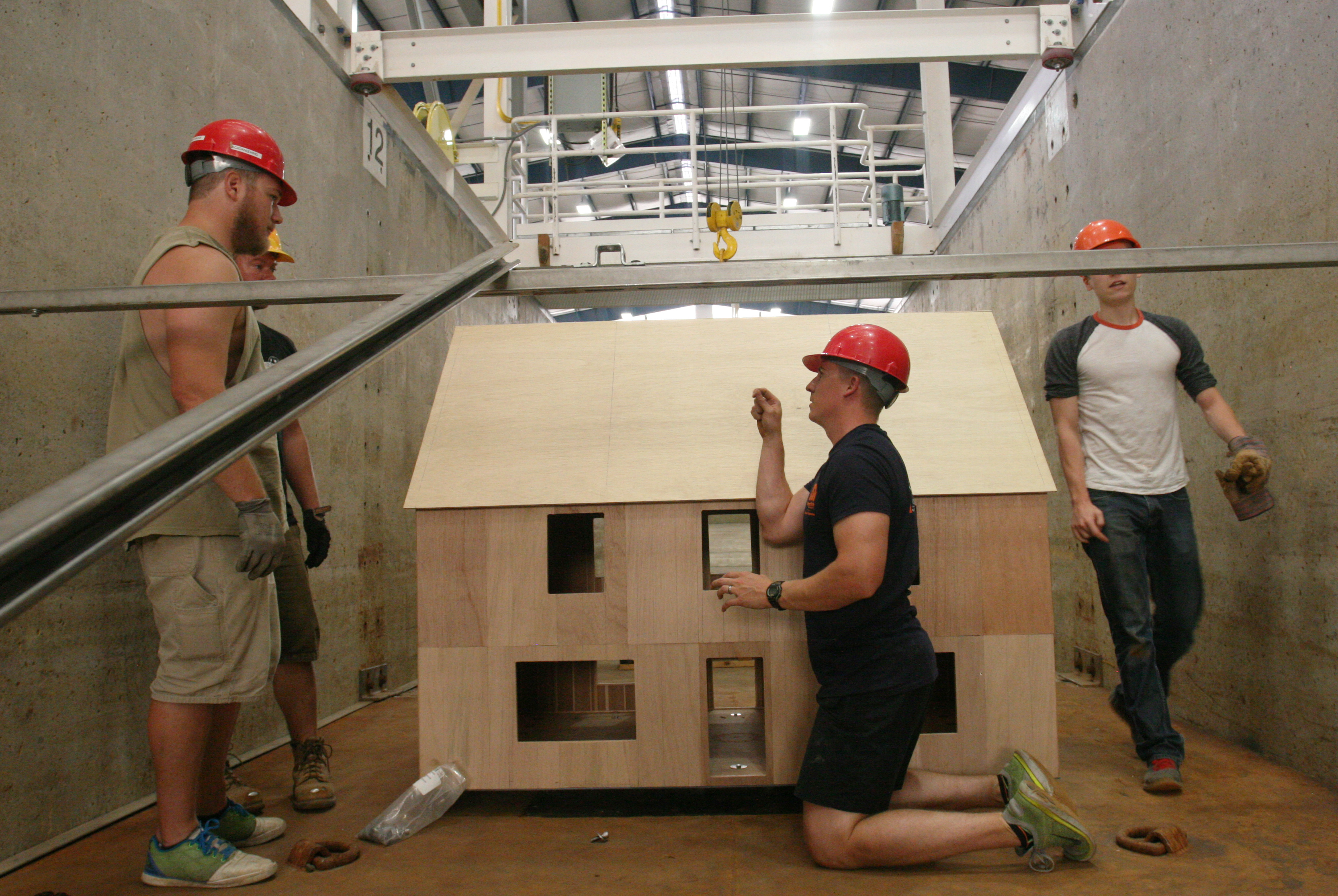
CRC researchers from Oregon State University, along with OSU students and University of Puerto Rico-Mayagüez students taking part in the SUMREX exchange program, test the strength of a model structure in the OH Hinsdale Wave Research Laboratory in the summer of 2018.
CRC researchers from Oregon State University, along with OSU students and University of Puerto Rico-Mayagüez students taking part in the SUMREX exchange program, test the strength of a model structure in the OH Hinsdale Wave Research Laboratory in the summer of 2018. Photo submitted.

Acevedo-Marrero and Santiago-Hernández worked with Dr. Cox to build a 1:6 scale house for use in OSU’s wave lab, where researchers are trying to develop a more accurate method of creating damage and loss estimates for structures impacted by overland waves. The students performed quality control on data from the wave lab tests and developed a digital house model to test their conclusions.

Read more

Q&A: E&WD Grant recipient Darien Williams

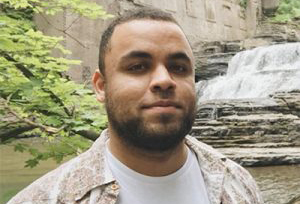
Darien Williams, a recent master’s graduate in City and Regional Planning from the University of North Carolina at Chapel Hill, was one of two students to receive an Education and Workforce Development Grant from the Coastal Resilience Center of Excellence (CRC) during the 2016-2018 school years. He reflected on her work with the CRC and other projects focusing on resilience.


Describe the work you did with the CRC during graduate school and how it shaped your career goals.

Darien Williams
Darien Williams

My work with the CRC took two forms; The first being engaging the world of resilient design education under the guidance of CRC Director Dr. Gavin Smith and UNC Professor Dr. Mai Thi Nguyen, alongside peers and Education and Workforce Development Grant Fellows Ashton Rohmer and Colleen Durfee. Through our investigation, we were able to uncover institutional strengths and challenges of departments attempting to incorporate hazard and climate resilience into the curricula of planning, engineering, architecture, landscape architecture and building science programs across the United States. As a new master’s student who would eventually decide to pursue a Ph.D., this project helped me understand the landscape I was about to enter, while also contributing to a larger understanding of an important shift in the way design professionals think about education.

Alongside this project, following Hurricane Matthew in 2016, I worked with the Hurricane Matthew Disaster Recovery and Resilience Initiative (HMDRRI), a project run through CRC. The realms of planning and policymaking were distant and abstract for me until this experience, which threw me into the middle of enormous recovery and climate-related planning conversations for six rural communities across Eastern North Carolina. I continue to draw on these experiences, which have informed my perspective on governance, community development, climate justice and the role of city planners. My current research would be impossible to meaningfully undertake without the depth of experience this work afforded me.

Read more

Study recommends expansion of resilient design education

  The growing cost and frequency of natural hazards point to a need to better educate and train future designers and practitioners, according to a new study from the Coastal Resilience Center of Excellence (CRC), but such education programs are not currently suitable to fit the growing need. These conclusions are part of a study undertaken by … Read more

Lessons learned from hurricanes Irma and María

  Professors Ismael Pagán-Trinidad and Ricardo López, who lead a Coastal Resilience Center education project at the University of Puerto Rico-Mayagüez, recently discussed the lessons learned by the university, the territory and themselves after hurricanes Irma and María hit the island in September 2017. To read more about the UPR-M project and its path since … Read more

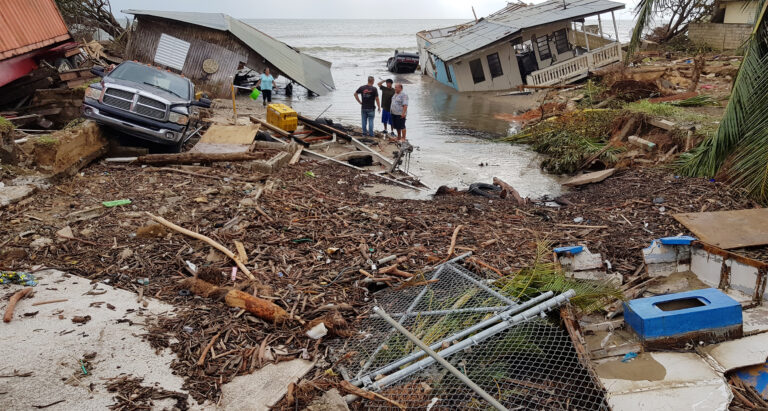
Damage at the El Mani coastal community in the aftermath of Hurricane María in September 2017. Photo by Ismael Pagán-Trinidad.

Puerto Rico project perseveres in the wake of María

Last spring’s graduating students at the University of Puerto Rico at Mayagüez (UPR-M) ended their semester a month later than usual, which was reflective of a school year that was far from normal. Plunged into darkness for weeks beginning in September 2017 and fighting a daily battle to return to normalcy, Puerto Ricans have been living an abnormal existence for a year since Hurricane María tore through the island last fall.

After the flood: A community’s struggle with substantial damage mitigation

In 2017, Hurricanes Harvey, Irma and Maria were reminders of how vulnerable communities can be to flooding and natural hazards. Strong winds, torrential rains and storm surge caused severe damage that blocked roads and inundated entire communities. If structures in these areas are “substantially damaged,” local governments participating in the National Flood Insurance Program (NFIP) … Read more

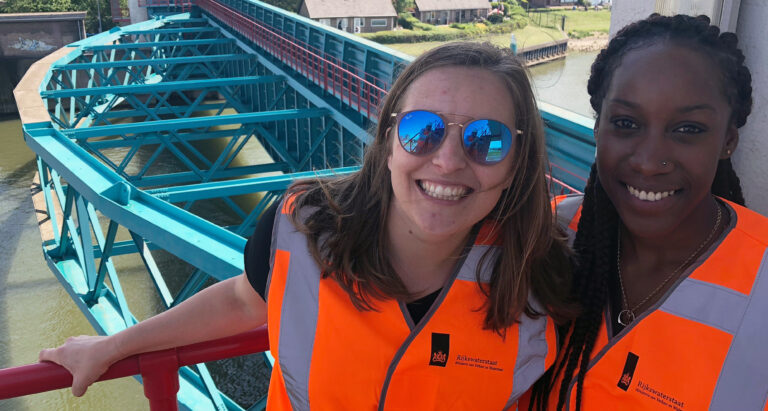
Welch, right, visited the Maeslantkering storm surge barriers, which contains a two-armed flood control system spanning 360 meters (1,180 feet) across. Photo submitted.

CRC students win honors, start careers in Homeland Security professional fields

Students involved in Coastal Resilience Center of Excellence (CRC) projects have been busy in the last several months – earning awards for their papers and presentations, interning with organizations in the homeland security arena and finding post-graduation positions that increase the nation’s resilience and that of coastal communities as a whole. Below are some snapshots … Read more

Q&A: Education and Workforce Development Grant recipient Colleen Durfee

Colleen Durfee, a recent master’s graduate in City and Regional Planning from the University of North Carolina at Chapel Hill, was one of two students to receive an Education and Workforce Development Grant from the Coastal Resilience Center of Excellence (CRC) during the 2016-2018 school years. She reflected on her work with the CRC and … Read more