


Glossary:
FIRM: Flood Insurance Rate Map | SFHA: Special Flood Hazard Area | CRS: Community Rating System | Substantial Damage

Local officials struggle with enforcing where and how people build in flood zones, due to a variety of factors. Better coordination and tools, shared between federal, state and local authorities, could improve flood mitigation enforcement and save money for all involved, according to a new report from Coastal Resilience Center (CRC) researchers.
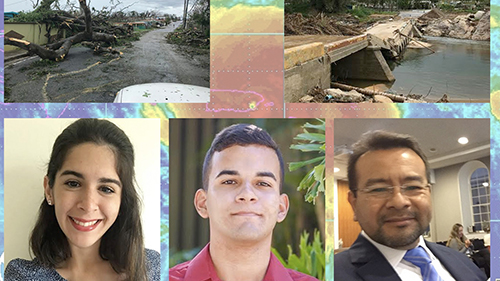
The report, authored by Dr. Paula Lorente and Jaimie Masterson, of Texas A&M University (TAMU), and Dr. Phil Berke of the University of North Carolina at Chapel Hill, “Research in Support of Floodplain Management Regulations Compliance,” lays out a series of recommendations based on interviews with local officials and a national advisory committee.
The report’s goal is to improve compliance with the National Flood Insurance Program (NFIP) – managed by the Federal Emergency Management Agency (FEMA) – by assessing the challenges and roadblocks that many communities face when enforcing the program’s regulations regarding substantial damages. The NFIP is the main instrument guiding flood mitigation and adaptation in the United States. Its operations are organized around mapping floodplains, issuing flood insurance, developing floodplain management regulations and providing grants for flood mitigation activities.